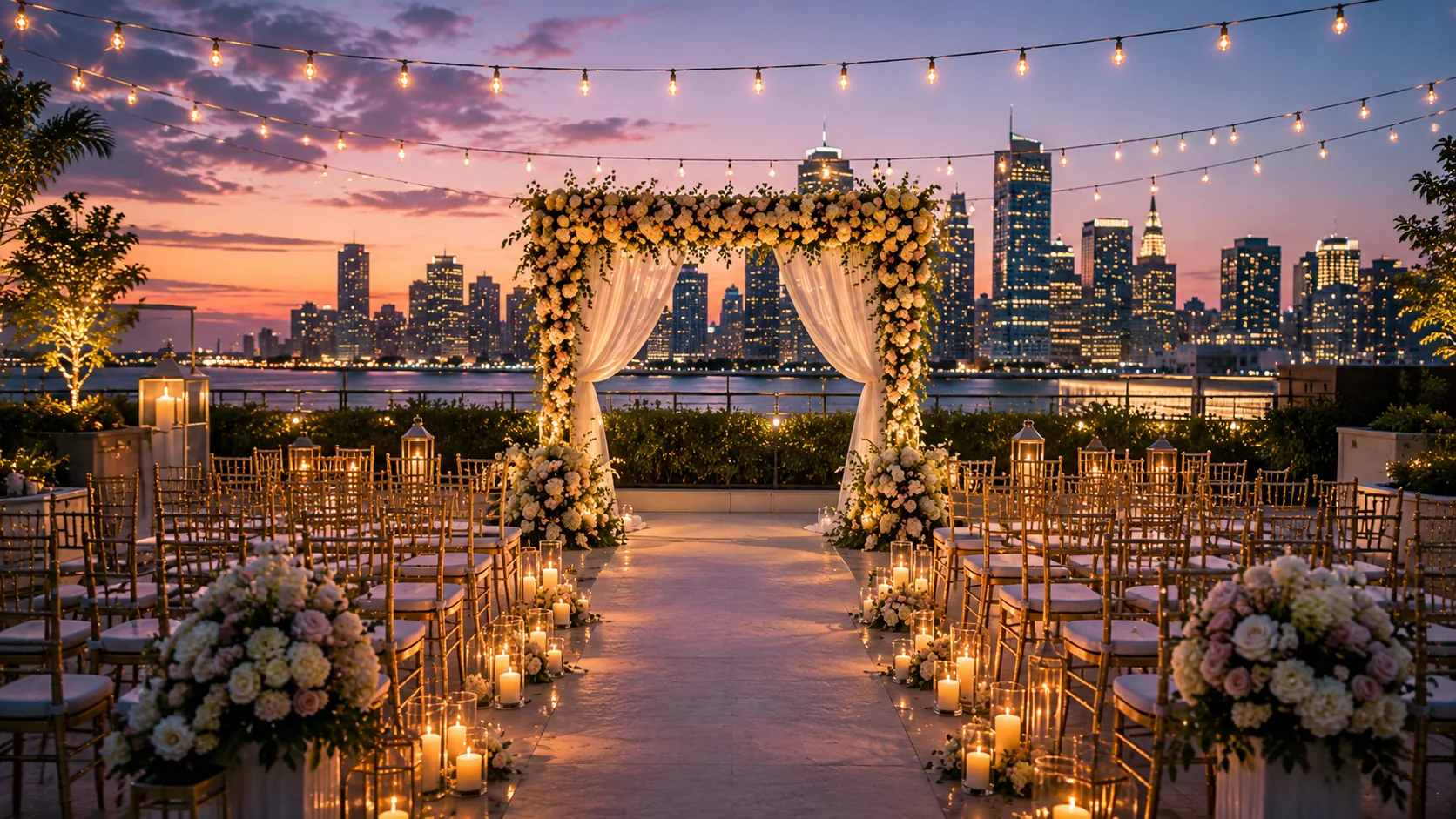
New York wedding field report
direct, opinionated, and efficient — romantic, but never pretending logistics do not matter.
New York is not one wedding market. It is a set of local wedding personalities that happen to share a state line. A couple planning here should begin by choosing the city and guest experience before choosing colors, because geography controls the real shape of the weekend.
The state’s strongest wedding stories come from listening to place. New York can support iconic, layered, fast-moving, and deeply local celebrations, but the same strategy will not work in every city. A waterfront weekend, a capital-city ceremony, a countryside estate, a downtown hotel reception, and a resort celebration all ask different questions of guests and vendors.
The best New York weddings do not flatten those differences. They use them. Couples should ask what the location naturally offers, what guests will need, what the weather might interrupt, and how the license path fits into the ceremony date.
Marriage license planning in New York
New York State says couples apply in person for a marriage license to any town or city clerk in the state; New York City couples commonly use the City Clerk process.
For planning purposes, couples should verify the official application process, identification rules, appointment availability, waiting periods, license validity, ceremony return rules, and certified-copy procedures with the relevant office. This site organizes the planning path; it does not replace the clerk, recorder, register, or court office.
Wendy can help turn the legal checklist into a wedding timeline. That means choosing an application window, reminding both partners what to bring, noting whether an officiant must return paperwork, and placing certified copies into the post-wedding checklist.
Choosing your New York wedding city
New York City
New York City is not impressed by vague plans. It will give you the skyline, the food, the photos, and the story — but only if your timeline respects the city.
Best fit: skyline drama, borough energy, and logistics that separate good plans from expensive chaos. Couples should investigate Manhattan hotels and rooftops, Brooklyn waterfront venues, Queens cultural halls, then pressure-test traffic between boroughs, vendor elevator/load-in rules, hotel blocks near subway lines before deposits get serious.
Staten Island
Staten Island weddings know everybody. That is the beauty and the planning challenge: the room has memory, opinions, cousins, and a very specific idea of what makes a good party.
Best fit: harbor views, family-heavy rooms, and New York romance without Manhattan theater. Couples should investigate waterfront venues near the harbor, South Shore banquet halls, historic district spaces, then pressure-test bridge traffic, ferry timing for guests, family table dynamics before deposits get serious.
Albany
Albany has a civic backbone: handsome buildings, serious rooms, and a quieter kind of elegance that works best when the plan respects weather and parking.
Best fit: capital architecture, Hudson Valley access, and formal-meets-neighborhood warmth. Couples should investigate Capitol-area hotels, downtown historic spaces, Hudson River-adjacent venues, then pressure-test state event calendars, winter travel, parking near downtown venues before deposits get serious.
Buffalo
Buffalo does not need to pretend. It likes warmth, character, good food, and people who show up. A wedding here should feel sturdy, generous, and a little cinematic.
Best fit: industrial romance, lake weather, loyal guest lists, and reception rooms that know how to celebrate. Couples should investigate waterfront and Canalside-adjacent venues, industrial lofts, historic hotels, then pressure-test lake-effect weather, football and event weekends, winter guest travel before deposits get serious.
Rochester
Rochester is graceful when you let it be itself: gardens, water, smart guests, soft light, and a plan that does not chase trends harder than it serves the people in the room.
Best fit: gardens, university-town thoughtfulness, upstate weather, and elegant family-centered pacing. Couples should investigate garden and estate venues, High Falls photo routes, downtown hotels, then pressure-test winter and shoulder-season weather, photo timing around water and gardens, guest cars and parking before deposits get serious.
Seasonality across New York
Couples often begin with May, June, September, and October, but the right season depends on the city, venue type, and guest list. Outdoor ceremonies need weather backup. Destination weekends need hotel availability. Family-heavy receptions need comfortable travel windows. Formal city weddings need calendars checked against conventions, games, holidays, and local events.
The weather lens here is four real seasons, with dramatic city heat, lake-effect surprises, and fall color worth planning around. That should shape ceremony timing, dress guidance, shade or heat plans, transportation, and how much of the day depends on open-air spaces.
Seasonality is also a budget issue. Peak months can raise venue and hotel demand, but they often give better guest comfort. Off-season months may open premium venues, but they ask more from the backup plan.
How the state’s cities compare
Couples do not need every city in New York to be right. They need the one city that fits their guest list, budget, visual language, family expectations, and weekend rhythm. This comparison is designed to help narrow the field before inquiry forms and venue tours take over the calendar.
New York City: Skyline drama, borough energy, and logistics that separate good plans from expensive chaos
New York City is not impressed by vague plans. It will give you the skyline, the food, the photos, and the story — but only if your timeline respects the city.
Planning lens: investigate Manhattan hotels and rooftops, Brooklyn waterfront venues, then build around traffic between boroughs, vendor elevator/load-in rules, hotel blocks near subway lines. This is where a couple can decide whether the city supports the room they want, the guests they are inviting, and the weekend they can realistically host.
Staten Island: Harbor views, family-heavy rooms, and new york romance without manhattan theater
Staten Island weddings know everybody. That is the beauty and the planning challenge: the room has memory, opinions, cousins, and a very specific idea of what makes a good party.
Planning lens: investigate waterfront venues near the harbor, South Shore banquet halls, then build around bridge traffic, ferry timing for guests, family table dynamics. This is where a couple can decide whether the city supports the room they want, the guests they are inviting, and the weekend they can realistically host.
Albany: Capital architecture, hudson valley access, and formal-meets-neighborhood warmth
Albany has a civic backbone: handsome buildings, serious rooms, and a quieter kind of elegance that works best when the plan respects weather and parking.
Planning lens: investigate Capitol-area hotels, downtown historic spaces, then build around state event calendars, winter travel, parking near downtown venues. This is where a couple can decide whether the city supports the room they want, the guests they are inviting, and the weekend they can realistically host.
Buffalo: Industrial romance, lake weather, loyal guest lists, and reception rooms that know how to celebrate
Buffalo does not need to pretend. It likes warmth, character, good food, and people who show up. A wedding here should feel sturdy, generous, and a little cinematic.
Planning lens: investigate waterfront and Canalside-adjacent venues, industrial lofts, then build around lake-effect weather, football and event weekends, winter guest travel. This is where a couple can decide whether the city supports the room they want, the guests they are inviting, and the weekend they can realistically host.
Rochester: Gardens, university-town thoughtfulness, upstate weather, and elegant family-centered pacing
Rochester is graceful when you let it be itself: gardens, water, smart guests, soft light, and a plan that does not chase trends harder than it serves the people in the room.
Planning lens: investigate garden and estate venues, High Falls photo routes, then build around winter and shoulder-season weather, photo timing around water and gardens, guest cars and parking. This is where a couple can decide whether the city supports the room they want, the guests they are inviting, and the weekend they can realistically host.
Building the wedding weekend
A strong New York wedding weekend starts with a guest map. Where are people arriving from? Where will they sleep? How far will they travel between rehearsal, ceremony, reception, brunch, airport, train, or highway? A beautiful venue becomes harder to love when guests feel stranded or confused.
The best couples make a simple weekend shape: welcome moment, wedding day, recovery or farewell moment. The welcome can be a casual restaurant, hotel bar, backyard gathering, or local landmark. The farewell can be brunch, coffee, bagels, tacos, or a quiet family goodbye. The point is not to over-program people; it is to make the trip feel held.
Wendy can help build this weekend map by city. She can separate local guests from travelers, identify hotel zones, flag transportation gaps, create packing/weather notes, and turn the state-level guide into a city-specific plan.
Direct answers couples ask before choosing New York
Is New York good for destination weddings?
Yes, if the city is chosen around guest travel. Some New York cities are natural destination weekends; others work better for regional guests, family-centered receptions, or couples with local roots.
Should we pick a city before a venue?
Usually yes. City choice controls hotel cost, transportation, weather backup, guest expectations, vendor availability, and the emotional tone of the wedding.
What should we confirm first?
Confirm the official license process, guest count, budget range, date window, desired city, and whether the wedding is local, destination, formal, casual, family-heavy, or weekend-oriented.
Venue settings to compare before touring
New York gives couples several different venue languages. The mistake is pretending they all require the same timeline, budget, guest communication, and backup plan. A good state guide should help couples understand what each setting asks for before they fall in love with one image.
Skyline Ceremony
A skyline ceremony in New York works best when the couple studies the operating details, not only the photos. Ask where guests arrive, how ceremony sound works, how catering moves, where portraits happen, and what the backup plan looks like if weather or traffic interrupts the ideal version.
This setting can be beautiful, but it needs a different checklist than the other settings on this page. Wendy can compare it against your guest count, season, budget, and city so the venue search becomes a decision instead of an endless gallery scroll.
Waterfront Reception
A waterfront reception in New York works best when the couple studies the operating details, not only the photos. Ask where guests arrive, how ceremony sound works, how catering moves, where portraits happen, and what the backup plan looks like if weather or traffic interrupts the ideal version.
This setting can be beautiful, but it needs a different checklist than the other settings on this page. Wendy can compare it against your guest count, season, budget, and city so the venue search becomes a decision instead of an endless gallery scroll.
Historic Hotel
A historic hotel in New York works best when the couple studies the operating details, not only the photos. Ask where guests arrive, how ceremony sound works, how catering moves, where portraits happen, and what the backup plan looks like if weather or traffic interrupts the ideal version.
This setting can be beautiful, but it needs a different checklist than the other settings on this page. Wendy can compare it against your guest count, season, budget, and city so the venue search becomes a decision instead of an endless gallery scroll.
Industrial Loft
A industrial loft in New York works best when the couple studies the operating details, not only the photos. Ask where guests arrive, how ceremony sound works, how catering moves, where portraits happen, and what the backup plan looks like if weather or traffic interrupts the ideal version.
This setting can be beautiful, but it needs a different checklist than the other settings on this page. Wendy can compare it against your guest count, season, budget, and city so the venue search becomes a decision instead of an endless gallery scroll.
Upstate Garden Estate
A upstate garden estate in New York works best when the couple studies the operating details, not only the photos. Ask where guests arrive, how ceremony sound works, how catering moves, where portraits happen, and what the backup plan looks like if weather or traffic interrupts the ideal version.
This setting can be beautiful, but it needs a different checklist than the other settings on this page. Wendy can compare it against your guest count, season, budget, and city so the venue search becomes a decision instead of an endless gallery scroll.
Guest travel and hotel-block strategy
Guest travel in New York should be planned as an experience, not a footnote. Couples should consider train stations, airports, borough or city driving patterns, winter contingencies, and hotel blocks that match the venue map. A guest who understands where to stay, how to arrive, and what to expect from the weather is already calmer before the ceremony starts.
The hotel block should be tied to the actual weekend map. If guests are flying in, the hotel should make sense for the airport and the wedding events. If guests are driving, parking and highway access matter. If the reception ends late, the return path matters. If the city has seasonal events, games, conventions, or holiday demand, rooms should be investigated early.
Wendy can help create two versions of the guest map: a simple guest-facing version and a deeper couple-facing version. The public version gives guests confidence. The private version helps the couple coordinate shuttles, welcome events, family logistics, vendor meals, and post-wedding brunch.
New York City
For New York City, the state-level plan becomes local only when you map hotels, ceremony location, photo time, reception flow, after-party options, and the official license source together. A couple should be able to explain why this city supports their guests before they ask guests to travel there.
Staten Island
For Staten Island, the state-level plan becomes local only when you map hotels, ceremony location, photo time, reception flow, after-party options, and the official license source together. A couple should be able to explain why this city supports their guests before they ask guests to travel there.
Albany
For Albany, the state-level plan becomes local only when you map hotels, ceremony location, photo time, reception flow, after-party options, and the official license source together. A couple should be able to explain why this city supports their guests before they ask guests to travel there.
Buffalo
For Buffalo, the state-level plan becomes local only when you map hotels, ceremony location, photo time, reception flow, after-party options, and the official license source together. A couple should be able to explain why this city supports their guests before they ask guests to travel there.
Rochester
For Rochester, the state-level plan becomes local only when you map hotels, ceremony location, photo time, reception flow, after-party options, and the official license source together. A couple should be able to explain why this city supports their guests before they ask guests to travel there.
How to report the license path before relying on it
The safest way to handle marriage-license content in New York is to treat it like reporting, not hearsay. Start with the official office. Confirm whether the process is county-based, city-based, clerk-based, or recorder-based. Confirm whether both partners must appear, whether online pre-applications are available, what identification is accepted, what the fee is, and how long the license remains usable.
For this state, the planning watchwords are town and city clerks, in-person application rules, and the need to verify local appointment procedures. Those facts should be confirmed close to the application date because office procedures, appointment availability, and fees can change. A guide can organize the questions; the official office answers them.
After the ceremony, couples should also understand the return and record process. Who returns the signed license? When is it recorded? How are certified copies requested? When might a certified copy be needed for name-change tasks, insurance, benefits, travel, or records? This is where the Bridal Blueprint becomes a Marriage Blueprint.
The editorial verdict on planning in New York
New York is best approached as a set of local decisions layered onto one emotional promise. The promise is the marriage. The decisions are city, venue, license, weather, guest flow, budget, vendors, registry, and the first tasks after the wedding. Couples who name those decisions early get more freedom later.
The goal is not to make the wedding feel managed to death. The goal is to make the management disappear. Guests should feel welcomed. The couple should feel present. Vendors should know where to be. Families should understand the flow. The city should feel like part of the story, not a logistical obstacle.
That is the job of Marriages In My City: local wedding planning that sounds like the place, respects the official process, and gives couples enough structure to enjoy the day they are building.
How Wendy builds a New York Bridal Blueprint
Wendy starts with city, date window, guest count, budget range, ceremony style, venue preferences, and what feels most stressful. From there, she can organize a local checklist that covers license research, venue comparison, hotel zones, vendor categories, registry timing, weather planning, and guest communication.
The point is not to make every New York wedding identical. The point is to make each local wedding easier to navigate, so couples can spend less energy chasing details and more energy making decisions that feel like them.
New York wedding FAQs
Where do couples get a marriage license in New York?
Couples should confirm the current process with the official clerk or county office connected to the place they are applying. New York State says couples apply in person for a marriage license to any town or city clerk in the state; New York City couples commonly use the City Clerk process.
What are the best months for a New York wedding?
Many couples look first at May, June, September, and October, then adjust for the specific city, venue, guest travel, and weather backup needs.
Which New York city should we choose?
Choose by guest flow and wedding identity: the city should support the venue style, travel map, hotel needs, ceremony setting, and the emotional tone of the day.
Can Wendy help compare cities in New York?
Yes. Wendy can compare city style, guest logistics, seasonality, likely vendor needs, and planning priorities so couples can pick a location intentionally.
Editorially updated June 25, 2026.